logo.png)
Marble vs Vitrified Tiles: Which Flooring Is Better for Your Home?
Introduction
📑 Table of Contents
- What Is Marble Flooring?
- What Are Vitrified Tiles?
- Marble vs Vitrified Tiles: Key Differences
- Marble vs Vitrified Tiles: Detailed Comparison
- Marble vs Vitrified Tiles: Cost
- Which Is More Durable?
- Which Is Easier to Maintain?
- Which Looks Better?
- Which Is Better for Different Rooms?
- Marble vs Vitrified Tiles: Installation
- Marble vs Vitrified Tiles: Which Is Better?
- Final Verdict
- Frequently Asked Questions
Introduction
Choosing the right flooring is one of the most important decisions when designing or renovating a home. Your floor needs to look beautiful, withstand everyday use, be easy to maintain and fit within your budget.
Two of the most popular choices for Indian homes are marble and vitrified tiles. Marble has been associated with natural beauty and luxury for generations, while vitrified tiles have become increasingly popular because of their durability, design variety and relatively easy maintenance.
But when it comes to marble vs vitrified tiles, which one is actually better?
The answer depends on your lifestyle, budget, design preferences and where the flooring will be used.
In this guide, we compare marble flooring and vitrified tiles across cost, durability, maintenance, appearance, installation, stain resistance and suitability for different areas of your home. By the end, you will have a clearer idea of whether marble or vitrified tiles are the right choice for your space.
What Is Marble Flooring?
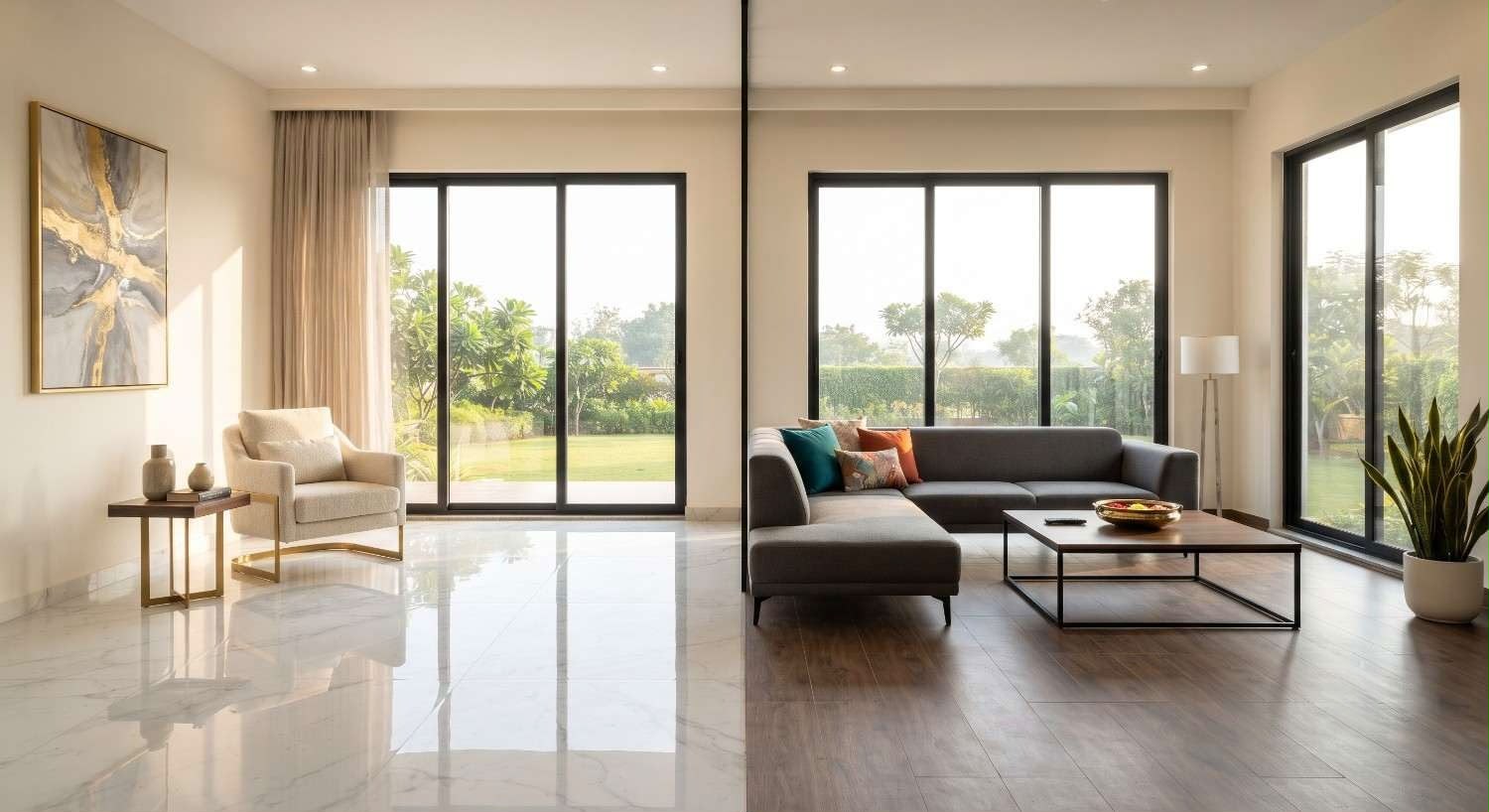
Marble is a natural stone formed through geological processes over thousands or millions of years. It is available in a wide range of colours, patterns and veining, making every piece naturally distinctive.
Marble flooring has traditionally been associated with luxury and premium residential architecture . Its natural patterns can create a sophisticated and timeless appearance that is difficult to reproduce exactly.
However, marble is a porous natural material. It can absorb moisture and is susceptible to staining and etching from acidic substances. It therefore requires more care than many modern tile options.
Advantages of Marble Flooring
- Natural and unique appearance
- Premium and luxurious look
- Can be polished to restore its shine
- Available in numerous colours and patterns
- Can complement classic, contemporary and luxury interiors
- Can have a very long service life when properly maintained
Disadvantages of Marble Flooring
- Generally requires more maintenance
- Can stain if spills are not cleaned promptly
- Can be affected by acidic substances
- Periodic polishing may be required
- Installation can be more labour-intensive
- Premium and imported marble can become expensive
What Are Vitrified Tiles?
Vitrified tiles are manufactured flooring products produced using mineral and clay-based materials that are fired at high temperatures. The vitrification process produces a dense, low-absorption tile surface.
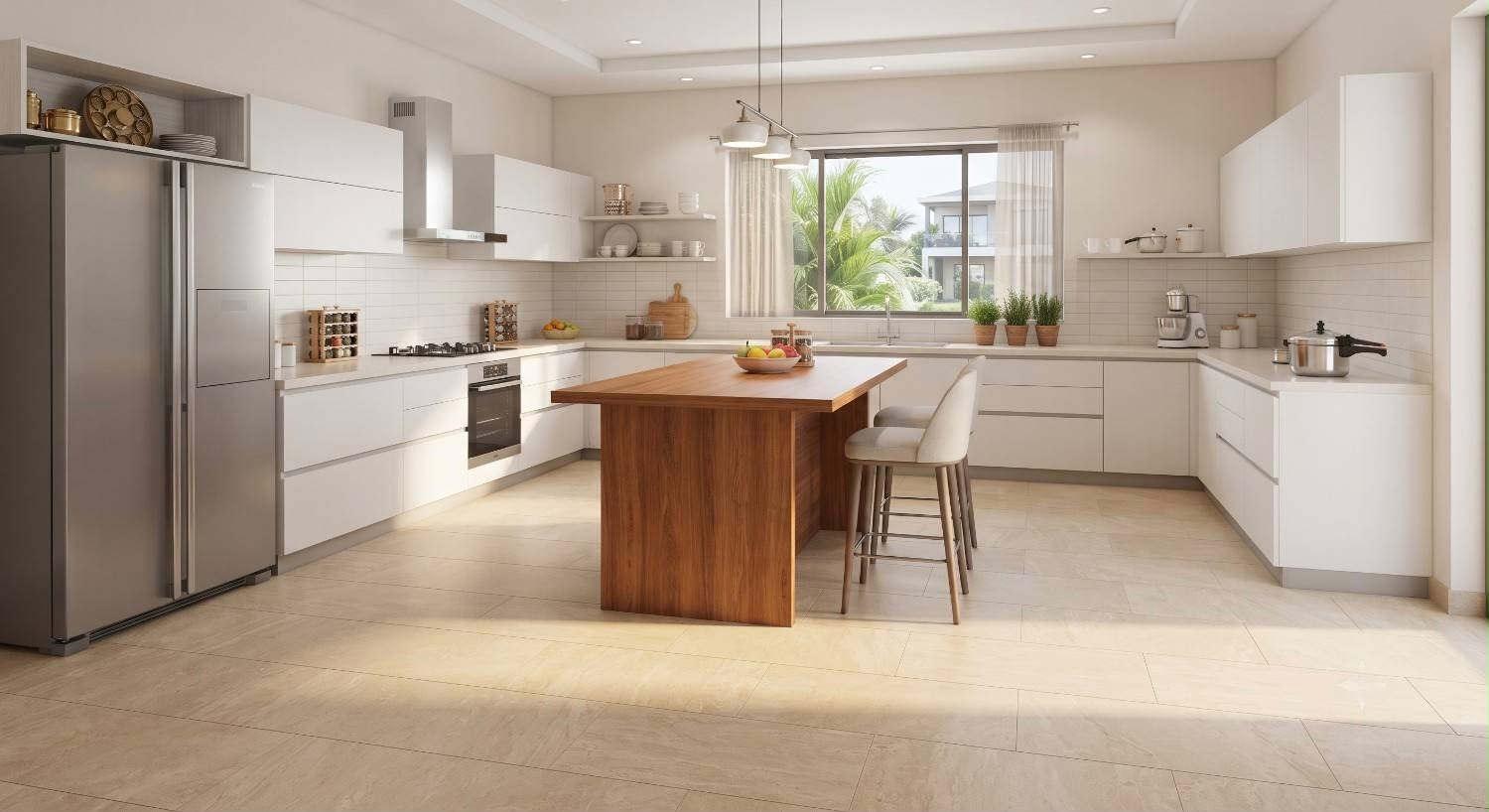
They are available in an extensive range of colours, textures, patterns, sizes and finishes. Modern vitrified tiles can also replicate the appearance of materials such as marble, stone and wood.
Their low water absorption and relatively easy maintenance make them popular for everyday residential applications.
Advantages of Vitrified Tiles
- Low water absorption
- Easy to clean and maintain
- Wide variety of designs and finishes
- Available in different sizes
- Consistent appearance
- Easy to replace individual damaged tiles
- Suitable for high-use areas when the appropriate finish is selected
- Available at different price points
Disadvantages of Vitrified Tiles
- Damaged tiles can chip or crack
- Some glossy finishes can become slippery when wet
- Grout lines are visible
- Premium large-format tiles can increase installation costs
- Printed stone-look tiles may not have the same natural variation as genuine marble
Marble vs Vitrified Tiles: Key Differences
| Factor | Marble Flooring | Vitrified Tiles |
|---|---|---|
| Material | Natural stone | Manufactured tile |
| Appearance | Natural and unique | Consistent and highly versatile |
| Design options | Natural colours and veining | Very wide range of colours, patterns and finishes |
| Water absorption | Higher | Very low |
| Maintenance | Higher | Lower |
| Stain resistance | Requires more care | Generally highly stain resistant |
| Scratch resistance | Depends on marble type and finish | Generally high |
| Polishing | Periodically required | Usually not required |
| Installation | More labour-intensive | Generally quicker |
| Replacement | More difficult to match exactly | Individual tiles can usually be replaced |
| Cost | Wide range; premium varieties can be expensive | Wide range, including budget and premium options |
| Best for | Luxury and natural aesthetics | Practical, low-maintenance everyday flooring |
The important point is that neither material is universally better. Each solves a different set of homeowner requirements.
Marble vs Vitrified Tiles: Detailed Comparison
1. Appearance and Aesthetics
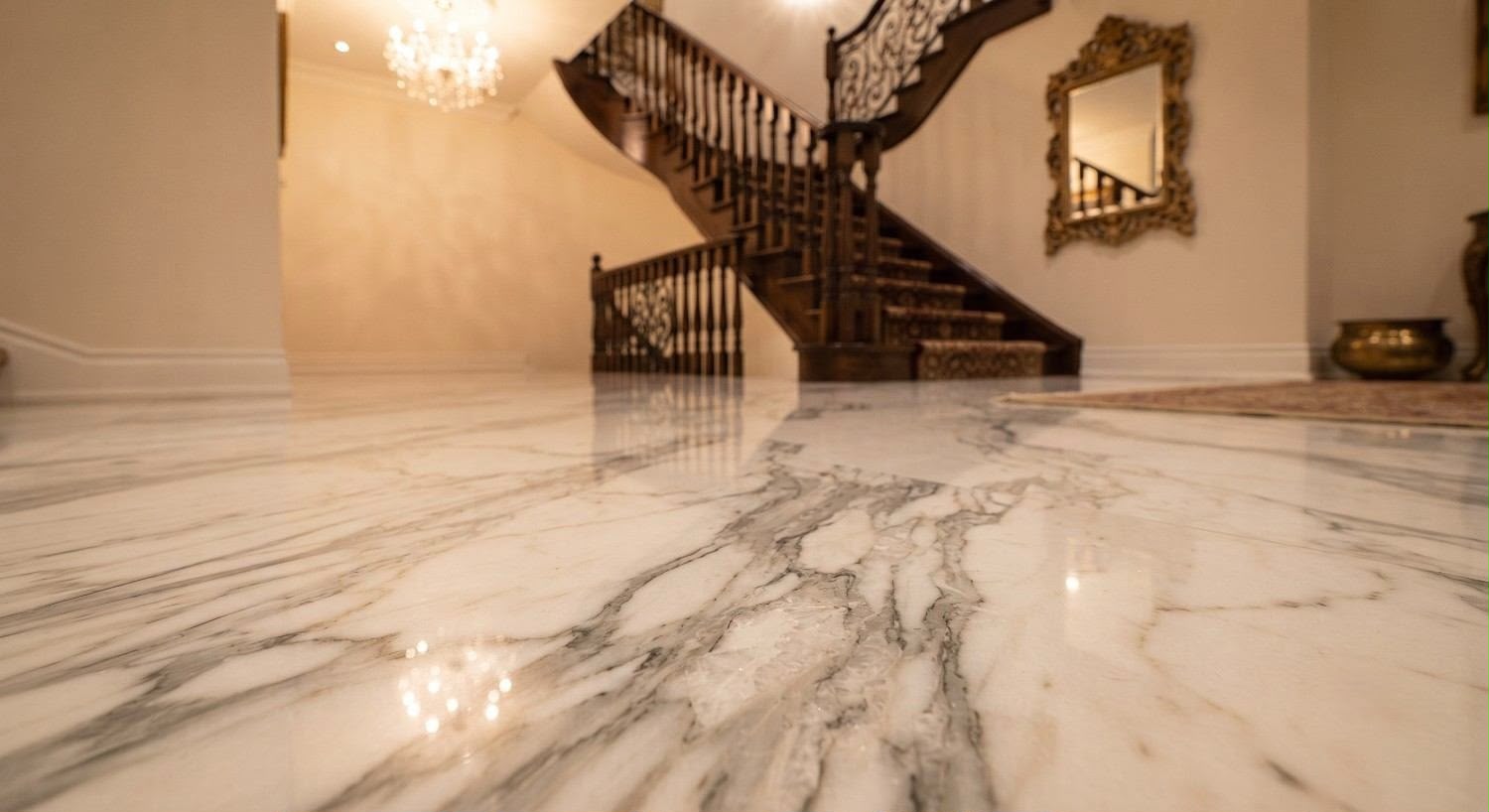
If your priority is natural beauty, marble has a significant advantage. Every marble slab has its own veining, colour variation and character. This makes marble particularly attractive for luxury living rooms , entrance foyers, staircases and statement spaces.
Vitrified tiles, however, offer considerably more design flexibility. You can find tiles that replicate marble, concrete, wood, stone and other finishes. Large-format vitrified tiles can also create a clean, contemporary appearance with fewer visible joints.
2. Durability
Both marble and vitrified tiles can be durable flooring choices when properly selected and installed. Marble can remain in use for many years and may even be refinished through professional polishing. However, its performance depends heavily on the type of marble, finish, installation and maintenance.
Vitrified tiles are designed for everyday use and are generally resistant to staining and surface wear. However, like any tile, they can crack or chip if subjected to significant impact or if installation is poor.
Rather than judging durability only by lifespan, homeowners should consider traffic, usage, maintenance and installation quality.
3. Maintenance
This is one of the biggest differences between marble vs vitrified tiles. Marble needs more attention because it is porous and can react with acidic substances. Spills should be cleaned promptly, and sealing and periodic polishing may be required depending on the marble and usage.
Vitrified tiles are generally easier to maintain. Routine sweeping and mopping are usually sufficient for normal residential use.
For homeowners looking for flooring that requires less day-to-day attention, vitrified tiles are generally the more practical choice.
4. Stain Resistance
Marbles natural porosity means it can absorb certain liquids. Oil, food, coloured beverages and acidic substances can cause problems if spills are left untreated.
Vitrified tiles generally have very low water absorption, making them easier to clean and more resistant to many common household stains. This is particularly important in areas such as kitchens and dining spaces.
5. Cost
The price of both marble and vitrified tiles varies significantly depending on quality, brand, size, origin, finish, installation and location.
There is no universal rule that marble is always expensive and vitrified tiles are always cheap. Premium vitrified tiles can also command a high price, while some Indian marbles can be comparatively affordable.
For example, current Indian-market comparisons show substantial overlap in pricing depending on the product category, with installation and finishing also affecting the final project cost.
6. Installation
Marble installation typically requires more specialized workmanship because slabs or pieces need to be properly selected, laid, levelled, and finished. After installation, polishing can also be part of the process depending on the marble and installation method.
Vitrified tiles are generally easier and faster to install, although large-format tiles require careful substrate preparation and skilled installation.
The quality of installation matters enormously. A high-quality flooring material can still perform poorly if the base is uneven, or the installation is inadequate.
7. Repair and Replacement
One practical advantage of vitrified tiles is that an individual damaged tile can often be replaced without removing the entire floor. With marble, matching a replacement piece can be more difficult because natural stone varies in colour and veining.
For homeowners who want easier future maintenance, keeping a few spare vitrified tiles from the original installation can be a smart decision.
Which Is Better for Different Rooms?
Choosing flooring based on the room is often more useful than choosing one material for the entire house.
| Area | Marble | Vitrified Tiles | Recommended |
|---|---|---|---|
| Living room | Excellent | Excellent | Depends on style |
| Bedroom | Excellent | Excellent | Depends on preference |
| Kitchen | Requires more care | Easy to maintain | Vitrified |
| Bathroom | Can be slippery when polished | Anti-skid options available | Vitrified |
| Dining area | Good | Excellent | Vitrified for easy maintenance |
| Foyer | Excellent | Excellent | Marble for luxury |
| Balcony | Application dependent | Anti-skid options | Vitrified/appropriate outdoor tile |
| High-traffic areas | Good with maintenance | Excellent | Vitrified |
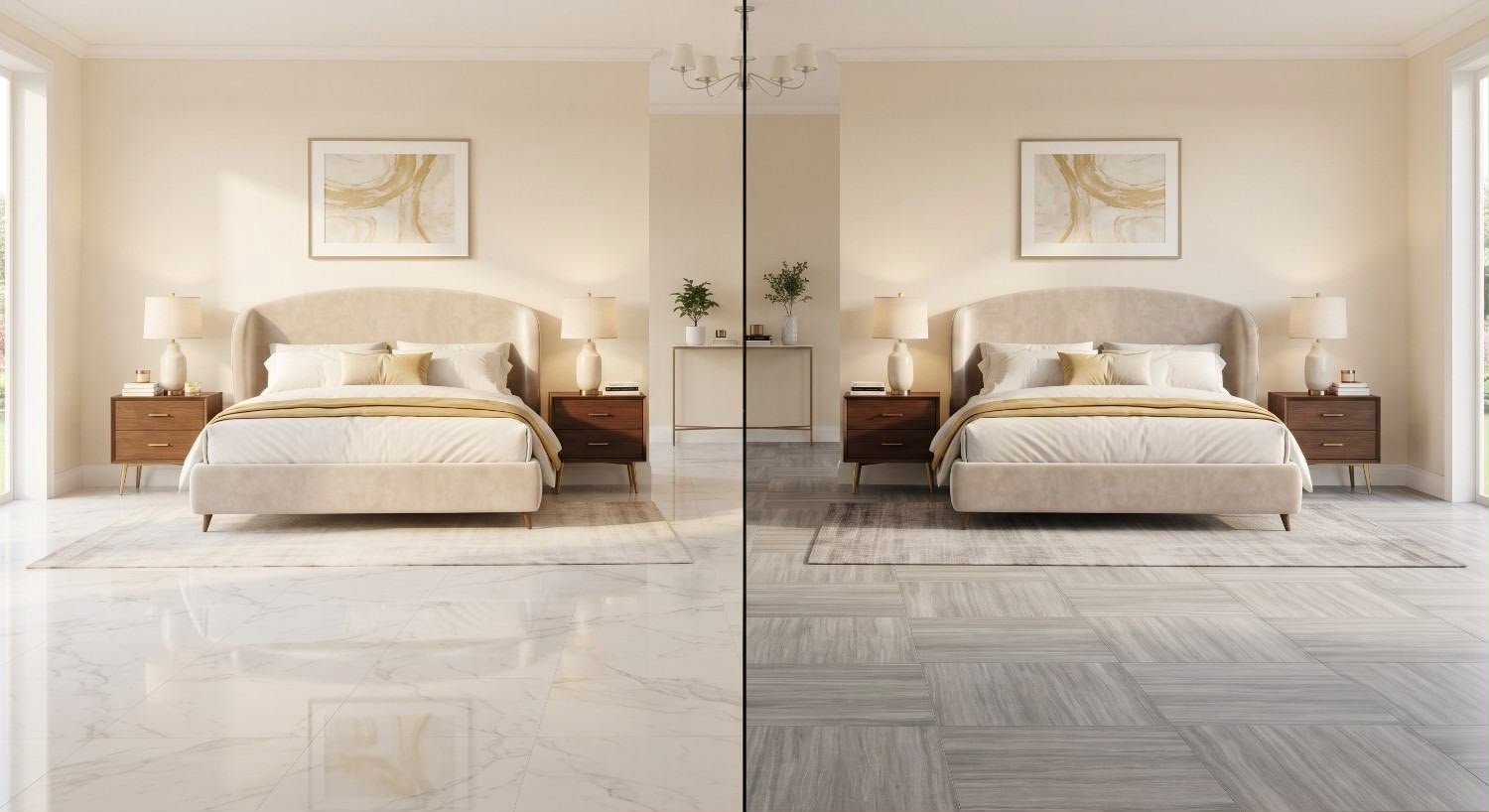
Living Room
Marble: Marble works beautifully in living rooms where the objective is to create a luxurious, elegant and timeless appearance.
Vitrified Tiles: Large-format vitrified tiles can create a sophisticated contemporary look while offering easier maintenance.
Best choice: Depends on the design concept and maintenance preference.
Bedroom
Both materials can work well in bedrooms. Marble can provide a premium, sophisticated finish, while vitrified tiles offer easier maintenance and a wide range of textures and colours.
Best choice: Vitrified tiles for practicality; marble for a luxury aesthetic.
Kitchen
Vitrified tiles are generally the more practical option for kitchen floors because kitchens are exposed to water, oil, food spills and frequent cleaning. Marble requires greater care because it can stain or etch when exposed to certain substances.
Best choice: Vitrified tiles.
Bathroom
For bathrooms, the most important consideration is slip resistance, not simply whether the material looks premium. A suitable anti-skid tile finish can provide better practicality for wet areas. Highly polished surfaces can become slippery when wet.
Best choice: Properly specified anti-skid vitrified tiles.
Balcony and Utility Areas
These areas experience moisture, dirt and frequent exposure to changing conditions. The flooring should be selected based on slip resistance, water exposure and the specific outdoor application.
Best choice: Suitable anti-skid tiles or another purpose-appropriate outdoor flooring material.
Marble vs Vitrified Tiles: Which Is Better?
So, marble or vitrified tiles—which one should you choose? There is no single answer.
Choose marble if:
- You want a natural, luxurious appearance
- You appreciate unique stone patterns
- You are willing to invest in maintenance
- You want a premium statement floor
- The flooring is part of a high-end architectural design
Choose vitrified tiles if:
- You want low-maintenance flooring
- You prefer predictable appearance and performance
- You want extensive design options
- You need flooring for kitchens or high-use spaces
- You want an easy-to-clean surface
- You want the flexibility to replace individual tiles
For many modern Indian homes, vitrified tiles are the more practical all-round flooring option, particularly for kitchens, high-use areas and homeowners who prioritise easy maintenance.
However, marble remains an excellent choice for homeowners who value natural material, luxury and timeless aesthetics.
In fact, a well-designed home does not necessarily need to use the same flooring everywhere. A combination of materials can often create a more interesting and functional interior.
Final Verdict: Marble vs Vitrified Tiles
The choice between marble vs vitrified tiles ultimately comes down to the balance between aesthetics, maintenance, budget and functionality.
Marble is ideal when natural beauty, individuality and luxury are the priority. Vitrified tiles are ideal when easy maintenance, design flexibility, stain resistance and everyday practicality matter most.
For a contemporary Indian home, there is no reason to limit yourself to one material. The best flooring solution may be a carefully planned combination based on how each room is used.
At LEAD , flooring should be considered as part of the larger architectural and interior-design strategy—from spatial planning and material selection to lighting, furniture and overall functionality. The right flooring is not simply the material that looks best in a showroom; it is the one that works best for your home, lifestyle and design vision.
Conclusion
Choosing the right flooring is a decision that impacts the look, feel and functionality of your home for years to come. Both marble and vitrified tiles have their strengths and limitations. Marble brings timeless natural beauty and luxury to a space, while vitrified tiles offer durability, design flexibility and ease of maintenance.
The best choice depends on your lifestyle, budget, design preferences and the specific requirements of each room. Many homeowners find that a thoughtful combination of materials—using marble for statement areas and vitrified tiles for high-use spaces—creates the most functional and visually appealing result.
At LEAD , we believe flooring should be chosen as part of a complete architectural and interior-design approach. Whether you choose marble, vitrified tiles or a combination of both, the right flooring will enhance your homes beauty, comfort and long-term value.
Frequently Asked Questions About Marble vs Vitrified Tiles
1. Which is better, marble or vitrified tiles?
Neither is universally better. Vitrified tiles are generally better for low maintenance, stain resistance and design flexibility, while marble is better for natural beauty, uniqueness and a premium aesthetic.
2. Is marble more expensive than vitrified tiles?
It depends on the type and quality of both materials. Premium marble can be significantly more expensive, but premium vitrified tiles can also have high prices. Always compare the complete installed cost rather than just the material price.
3. Which is easier to maintain, marble or vitrified tiles?
Vitrified tiles are generally easier to maintain. Marble may require more careful cleaning, sealing and periodic polishing depending on the stone and usage.
4. Which lasts longer, marble or vitrified tiles?
Both can provide long-term service when correctly selected and installed. Well-maintained marble can be refinished over time, while vitrified tiles offer strong everyday performance with relatively low maintenance.
5. Are vitrified tiles better than marble for the kitchen?
Generally, vitrified tiles are more practical for kitchen flooring because they are easier to clean and are less susceptible to staining than porous natural stone.
6. Can vitrified tiles look like marble?
Yes. Modern vitrified tiles are available in marble-look designs with different colours, veining and finishes. They can provide a similar visual effect while offering the maintenance advantages of manufactured tile.
7. Is marble flooring difficult to maintain?
Marble requires more care than vitrified tiles. Spills should be addressed quickly, and some marble floors may require sealing and periodic professional polishing.
8. Which flooring is better for bathrooms?
For bathrooms, choose a flooring product specifically designed with suitable slip resistance for wet conditions. Anti-skid vitrified tiles are a commonly practical choice. Highly polished surfaces should be approached carefully because wet floors can become slippery.
9. Which is better for a luxury home—marble or vitrified tiles?
For a traditional luxury aesthetic, natural marble can be an excellent choice. However, premium large-format vitrified tiles can also create an elegant, contemporary luxury look.
10. Is marble better for resale value?
Flooring alone does not determine a homes resale value. Overall architecture, location, construction quality, maintenance, layout and interior design are more important factors. Choose flooring that complements the quality and design intent of the home rather than choosing marble solely for perceived resale value.
11. Which flooring is better for Indian homes?
Both can work well in Indian homes. Vitrified tiles are particularly practical because of their low maintenance and wide range of applications, while marble is suitable for homeowners seeking natural stone and a premium aesthetic.
12. Can marble and vitrified tiles be used together?
Absolutely. Combining materials can be an effective interior-design strategy. For example, marble can be used in a foyer or statement living area while vitrified tiles are used in bedrooms, kitchens and other practical zones.
Planning Your Dream Home Flooring?
Every home and lifestyle is unique. The right flooring choice depends on how you live, your design preferences, and the specific requirements of each space in your home.
At LEAD Architects & Interior Designers, we specialize in creating homes where every material is chosen with purpose—from flooring to finishes, lighting to furniture. Our team can help you select the right flooring for every room, ensuring it complements your design vision and works for your daily life.
Connect with our team to discuss your project and create a home thats beautiful, functional, and built to last.